
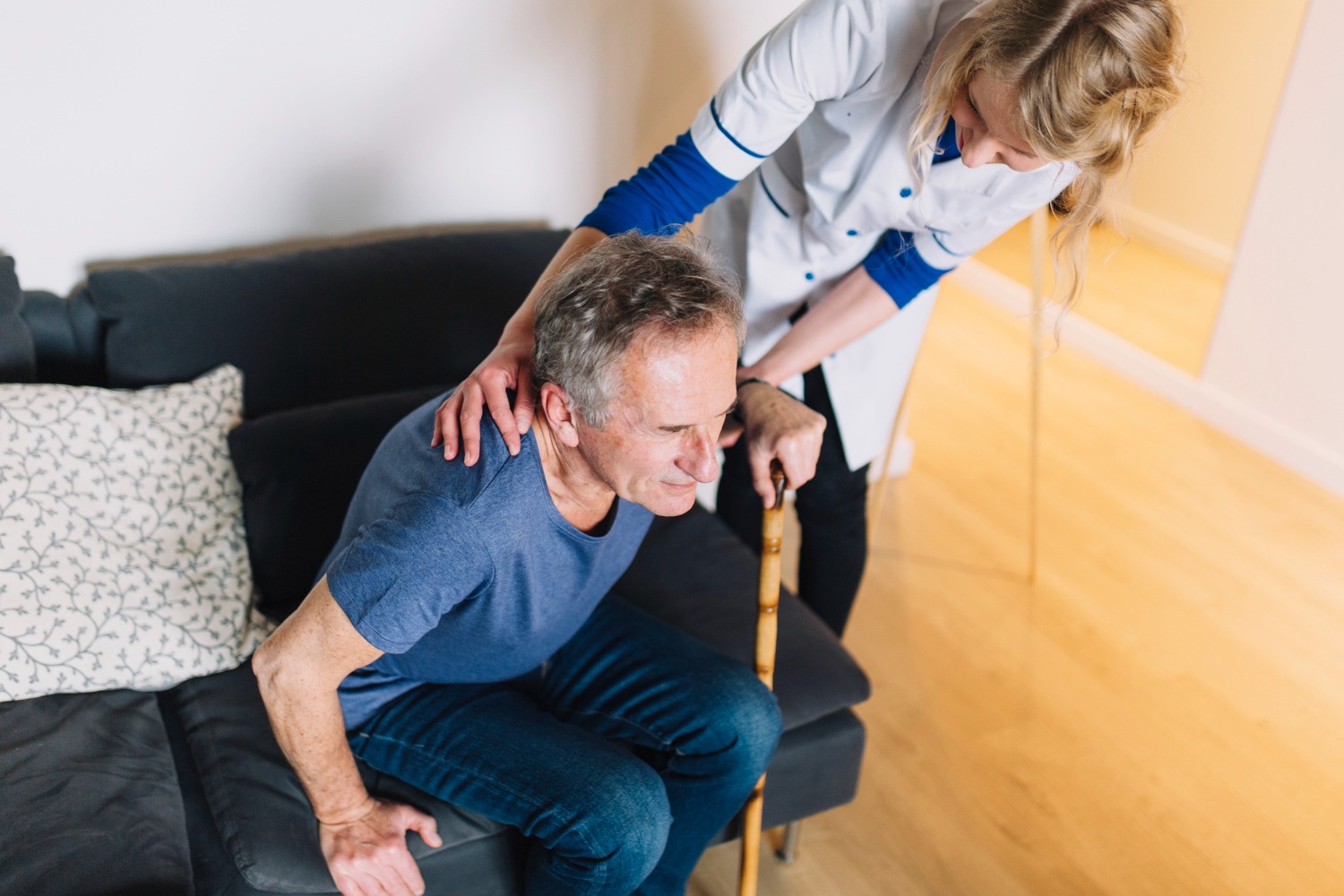
Most people only think about their balance after they’ve already lost it. A near-miss on the stairs, a stumble off a curb, a grab for the kitchen counter that happened to work out, these moments get brushed off as clumsiness rather than treated as data. But balance is a measurable, trainable, and often quietly declining system, and the body usually sends signals long before an actual fall happens. The problem is that those signals rarely look dramatic. They show up as a slightly wider stance while walking, a little more hesitation on uneven pavement, or a new habit of holding onto furniture while moving around a room that used to require no thought at all.
Waiting for a fall to justify an evaluation is a bit like waiting for a heart attack to justify checking blood pressure. By the time the event happens, the damage, a fractured hip, a head injury, a long hospital stay, is often already done, and recovery from that point is a different and much harder road than prevention would have been. A proactive balance assessment gives a physician actual numbers to work with: gait speed, reaction time, muscle strength asymmetries, and specific deficits that can usually be identified and at least partially corrected before they turn into a 2 a.m. emergency room visit. The rest of this article walks through why the data on falls is so sobering, what actually goes into a clinical balance evaluation, and how to recognize the point where “I should probably get this checked” turns into “I need to get this checked now.”
The Numbers Behind Fall Risk in Older Adults Are Worse Than Most People Realize
According to the CDC, more than 14 million adults aged 65 and older, roughly one in four, report falling at least once a year, and that figure is almost certainly an undercount since many falls go unreported to a doctor. Among those falls, a meaningful share result in serious injury: hip fractures, traumatic brain injuries, and lacerations requiring stitches or surgical repair. The CDC also tracks fall-related deaths specifically, and the trend is not improving, the age-adjusted fall death rate for older adults rose from 64.7 to 78.4 per 100,000 between 2018 and 2024, a jump of about 21% in just six years. That’s not a statistic that moves because of bad luck; it moves because risk factors like chronic disease, medication use, and sedentary lifestyles are becoming more common in the aging population.
What makes these numbers especially relevant to a primary care conversation is that a fall is rarely a random, isolated event. Researchers who study geriatric fall risk consistently find that the majority of falls have an identifiable contributing cause, a medication interaction, an undiagnosed inner-ear problem, uncorrected vision, or muscle weakness that crept in gradually. In other words, most falls are not accidents in the purest sense; they are the visible outcome of an invisible process that had been building for months or years. That reframes the entire conversation: if the underlying cause can be found and addressed early, the fall itself, along with the fracture, the hospitalization, and the loss of independence that often follows, can frequently be avoided altogether.
Fall Risk Builds Quietly Through Specific, Identifiable Conditions
Diabetes is one of the most underappreciated contributors to fall risk, largely because its effect on balance is indirect. Roughly half of people who have had type 2 diabetes for more than ten years develop some degree of peripheral neuropathy, a nerve condition that dulls sensation in the feet and lower legs. Balance depends heavily on proprioception, the body’s ability to sense where its feet are in space without looking down, and when that sensory feedback is degraded by neuropathy, the brain has to rely much more heavily on vision and the inner ear to stay upright. That’s a fragile system, and it’s part of why diabetic patients fall at meaningfully higher rates than non-diabetic peers of the same age, even when strength and vision are otherwise comparable.
The inner ear is the other major piece people rarely think about until something goes wrong with it. The vestibular system, housed in the inner ear, is responsible for detecting head movement and rotation, and it works in constant coordination with vision and the muscles of the neck and legs to keep a person oriented. Conditions like benign paroxysmal positional vertigo, vestibular neuritis, and age-related vestibular hypofunction become more common after 65 and often present subtly, a brief spin of the room when turning over in bed, a sense of unsteadiness in the dark, or difficulty walking in a straight line with eyes closed. These are clinical findings a physician can actually test for, rather than symptoms a patient has to just live with or write off as “getting older.”
Medications Are One of the Most Overlooked and Most Fixable Fall Risk Factors
Polypharmacy, generally defined as taking four or more medications regularly, is strongly associated with increased fall risk, and the relationship gets stronger as the medication count climbs. This isn’t just about any one drug being dangerous; it’s about the cumulative effect of multiple medications interacting in ways that slow reaction time, lower blood pressure unpredictably, or cause mild sedation that a patient may not even notice day to day. Benzodiazepines and other sedative-hypnotics used for sleep or anxiety are among the most consistently cited culprits in fall research, since they blunt the reflexes needed to catch a stumble before it becomes a fall. Certain antihypertensives can cause orthostatic hypotension, a drop in blood pressure upon standing, which produces the lightheaded, momentarily unsteady feeling that precedes a large share of falls in older patients.
The encouraging part of this picture is that medication-related fall risk is often the most correctable factor of all. A thorough medication review can identify drugs that are duplicating effects, interacting with each other, or simply no longer necessary at the dose originally prescribed. This is exactly the kind of review that benefits from a physician who has a complete picture of a patient’s prescriptions rather than a single specialist looking at only one piece of it, which is where coordinated medication management becomes a practical first step rather than an abstract recommendation. Adjusting or tapering even one or two problematic medications has been shown to meaningfully reduce fall incidence in older adults, which makes this one of the highest-value conversations a patient can have with their doctor.
What Actually Happens During a Clinical Balance Assessment
A proper balance assessment is not a single test but a short series of measurements, each targeting a different part of the system that keeps a person upright. Gait speed is one of the simplest and most predictive: a patient is timed walking a set distance at a normal pace, and a speed below roughly 0.6 to 0.8 meters per second is associated with significantly higher fall risk, frailty, and even mortality in longitudinal studies. It sounds almost too simple to matter, but gait speed has been called a “vital sign” in geriatric medicine precisely because it correlates with so many underlying systems, cardiovascular fitness, muscle strength, cognitive processing, and joint health, all at once.
The Berg Balance Scale is a more detailed, 14-item assessment that scores tasks like standing unsupported, reaching forward while standing, turning to look behind, and standing on one leg, each rated from 0 to 4 for a maximum score of 56. A score below 45 generally signals an increased fall risk, and scores below 40 are associated with a substantially higher probability of falling within the next year. The Timed Up and Go test, which measures how long it takes someone to rise from a chair, walk a short distance, turn around, and sit back down, is another widely used tool, times over about 12 seconds flag a patient for further evaluation. None of these tests require advanced equipment or a specialist referral; they can be performed in a standard primary care visit and interpreted immediately.
The Warning Signs That Mean It’s Time to Ask, Not Wait
Certain changes are specific enough that they should prompt a conversation with a physician well before any actual fall occurs. A new need to hold onto walls, furniture, or handrails during normal movement around the house is one of the clearest signals, since it typically means the body has already started unconsciously compensating for instability. Dizziness or lightheadedness when standing up from sitting or lying down, especially if it happens consistently rather than as an occasional fluke, points toward either a vestibular issue or a blood pressure problem, both of which are identifiable with simple in-office testing. A noticeably slower or more cautious walking pace, particularly one that a spouse or family member has commented on, is also worth raising, since outside observers often notice gait changes before the person experiencing them does.
Recent changes in medication, a new diagnosis of diabetes or a worsening of existing diabetic control, or a recent hospitalization are also appropriate triggers for a proactive assessment, since all three are independently linked to short-term spikes in fall risk. For patients managing several chronic conditions at once, balance evaluation fits naturally into the kind of comprehensive, coordinated geriatric care that looks at mobility alongside everything else affecting day-to-day function. The goal isn’t to wait for a clear red flag that can’t be ignored, it’s to treat the quieter signals as reason enough to ask for an evaluation while there’s still time to act on the findings
Talk to Dr. Divya Javvaji About a Proactive Balance Evaluation
Dr. Divya Javvaji and the team at Prime MD Plus in Coppell, TX work with patients specifically on identifying fall risk before it turns into a hospital visit, using the same gait speed measurements, functional balance testing, and medication reviews described above. Because Prime MD Plus operates as a primary care and internal medicine practice rather than a single-issue specialist office, a balance concern can be evaluated in the same visit where diabetes management, blood pressure, and medication lists are already being reviewed, which matters, since those factors are so frequently connected to each other. Patients don’t need to already be experiencing falls to request this kind of evaluation; a family history of fractures, a recent diagnosis that affects mobility, or simply turning 65 are all reasonable enough reasons to ask.
Scheduling a dedicated balance assessment takes less time than most patients expect and gives both the patient and physician a concrete baseline to track over future visits, rather than a vague sense that things feel “a little different lately.” To learn more about Dr. Javvaji’s approach to fall prevention and the full range of services offered at the practice, visit Prime MD Plus and request an appointment. Catching instability early, while it’s still just a number on a gait speed test rather than a fracture on an X-ray, is the entire point of asking before waiting.
Frequently Asked Questions
At what age should I start thinking about a balance assessment?
Most physicians recommend starting around age 65, or earlier if you have diabetes, a history of inner-ear problems, or take multiple medications regularly. These risk factors matter more than age alone.
Does a balance assessment hurt or take a long time?
No. It typically involves simple timed walking and standing tasks performed in a standard exam room, usually completed within a single office visit.
Can medications really be causing my unsteadiness?
Yes. Sedatives, certain blood pressure medications, and combinations of four or more drugs are all well-documented contributors to fall risk, and many of these effects are reversible with a medication review.
What happens if my balance assessment shows a problem?
Your physician will typically recommend a targeted plan, which may include physical therapy, medication adjustments, vision or hearing follow-up, or referral for further vestibular testing depending on what the results point to.