
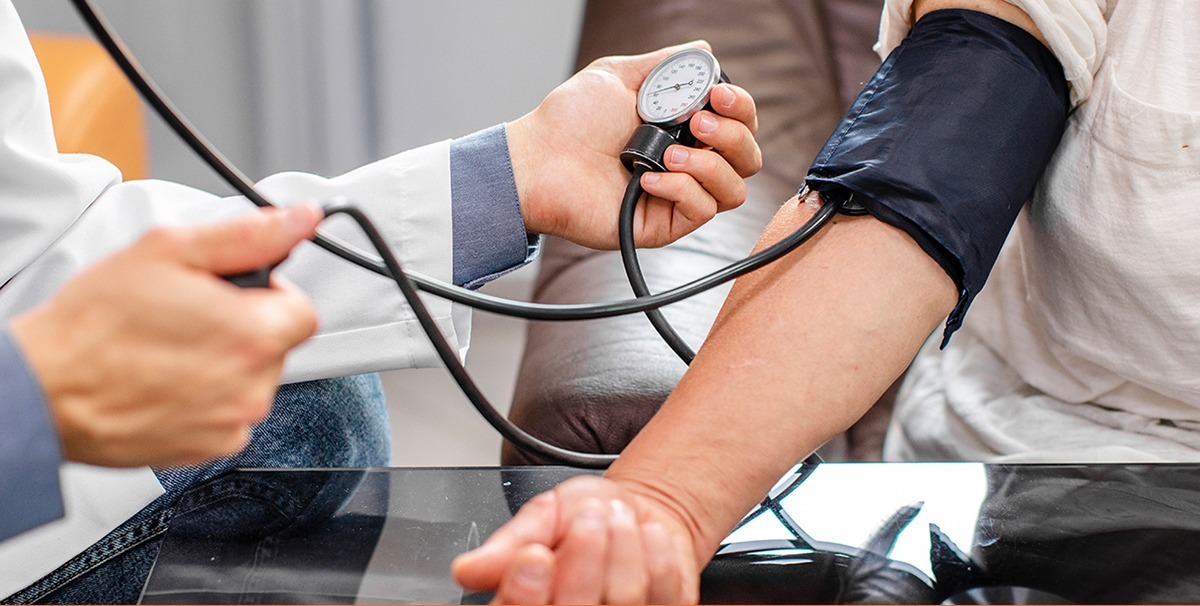
Most people know a few things will happen physically. Blood pressure gets checked. Weight gets measured. Blood might get drawn. But beyond those expectations, the exam can feel like a series of steps that happen to you without much explanation of what’s being looked for or why.
That lack of context is worth filling in. Each part of a physical exam is looking for something specific and taken together, they give your physician a picture of your health that no single test can provide. Understanding what’s being assessed and why makes the visit more useful, and it makes you a more active participant in your own care.
Vital Signs Are a Starting Point, Not the Whole Story
Blood pressure is the vital sign most people focus on, and for good reason, hypertension is one of the most common and most consequential conditions that preventive care is designed to catch early. But blood pressure is one of several vital signs, each of which tells a different part of the story.
Heart rate matters. A resting heart rate that’s consistently elevated can reflect deconditioning, thyroid dysfunction, anemia, anxiety, or cardiac issues, none of which would show up on a blood pressure reading. A heart rate that’s unusually slow may indicate medication effects or conduction problems worth investigating.
Respiratory rate is rarely discussed but clinically informative. Breathing that’s faster or more labored than normal can reflect pulmonary or cardiac problems that the patient hasn’t noticed or hasn’t mentioned.
Temperature, even at a routine physical, provides context. A low-grade fever that a patient dismissed as nothing can be the only visible sign of an early infection or inflammatory process.
Weight and BMI are recorded not primarily as a judgment on lifestyle but as a trend. A 10-pound unintentional weight loss since the last visit is a clinical signal that warrants investigation, regardless of whether the patient feels unwell.
Oxygen saturation, increasingly measured at routine visits, can reveal early pulmonary or cardiac compromise before shortness of breath becomes obvious.
The Physical Exam Is Pattern Recognition
After vital signs, the hands-on portion of the exam is where a physician is doing something specific: looking for findings that suggest disease, comparing what they see today to what they’ve seen before, and building context that lab work alone can’t provide.
Eyes. The retina is the only place in the body where blood vessels can be directly visualized without surgery. Changes in the retinal vessels reflect systemic vascular health and can show early signs of hypertension, diabetes, or atherosclerosis before those conditions are otherwise apparent.
Neck. The thyroid gland is palpated for enlargement or nodules. Lymph nodes in the neck are checked for swelling that might indicate infection, immune system activity, or less commonly, malignancy. The carotid arteries are listened to for bruits, turbulent blood flow that can signal narrowing.
Heart. The stethoscope isn’t just confirming that the heart is beating. The physician is listening for murmurs, abnormal sounds that can indicate valve problems and for rhythm irregularities that might not produce symptoms but carry meaningful cardiovascular risk.
Lungs. Breath sounds reveal a lot. Crackles can indicate fluid accumulation from heart failure or early pneumonia. Wheezing suggests airway narrowing. Diminished breath sounds in one area can reflect fluid or structural problems.
Abdomen. The physician is checking for organ enlargement, an enlarged liver or spleen can reflect a range of conditions from alcohol use to blood disorders to heart failure. Tenderness in specific areas points toward problems with specific organs. An aortic aneurysm can sometimes be felt as a pulsating mass, which is why abdominal palpation in older adults is not a formality.
Extremities. Swelling in the legs can reflect heart failure, venous insufficiency, or lymphatic problems. Peripheral pulses are checked to assess circulation. Skin changes on the lower legs can indicate poor arterial or venous flow. Joint changes are noted.
Neurological. Reflexes, coordination, and gait, how a person walks, tell a physician about neurological function in ways that conversation alone doesn’t capture. A subtle change in gait can be an early sign of neurological disease, medication effects on balance, or musculoskeletal decline. In older adults, a brief cognitive screen is increasingly standard, not as an alarm but as a baseline that future visits can be compared against.
What It Looks Like Over Time
A single physical exam gives a snapshot. A series of physical exams over years gives a trajectory and that trajectory is where the real diagnostic value lives.
A physician who has examined the same patient annually for five years notices when the ankle reflexes that were once brisk have become diminished, when the heart murmur that was soft is now louder, when the abdominal exam that was always unremarkable now has something worth investigating. These longitudinal comparisons require a physician who actually knows the patient, which is one of the strongest arguments for continuity in primary care.
This is also why attending a physical when you feel fine is not a waste of time. The exam that establishes your normal is the one that makes future abnormalities detectable.
The Conversation Is Part of the Exam
A good physical doesn’t end when the stethoscope comes off. The physician should be asking about sleep, stress, mood, energy, and any changes in daily function, not as small talk, but as clinical assessment. These questions surface problems that don’t show up on lab work and wouldn’t be visible on exam. Depression, cognitive changes, relationship stress, social isolation, and functional decline are all clinically meaningful, and none of them are detectable without asking.
For older adults especially, a geriatric care perspective adds another layer, asking about falls, driving, medication management at home, and whether daily tasks are becoming harder. These questions don’t fit neatly into a 15-minute appointment, which is one reason why adequate time and a physician who takes the full picture seriously matter.
Your Physical Is Only as Good as the Physician Conducting It
At Prime MD Plus in Coppell, TX, Dr. Divya Javvaji provides comprehensive preventive care for adults across the Dallas-Fort Worth area, including thorough physical exams that go well beyond checking a single number. With board certification in both internal medicine and geriatrics, she brings a whole-person perspective to every visit. Reach out to schedule an appointment.