
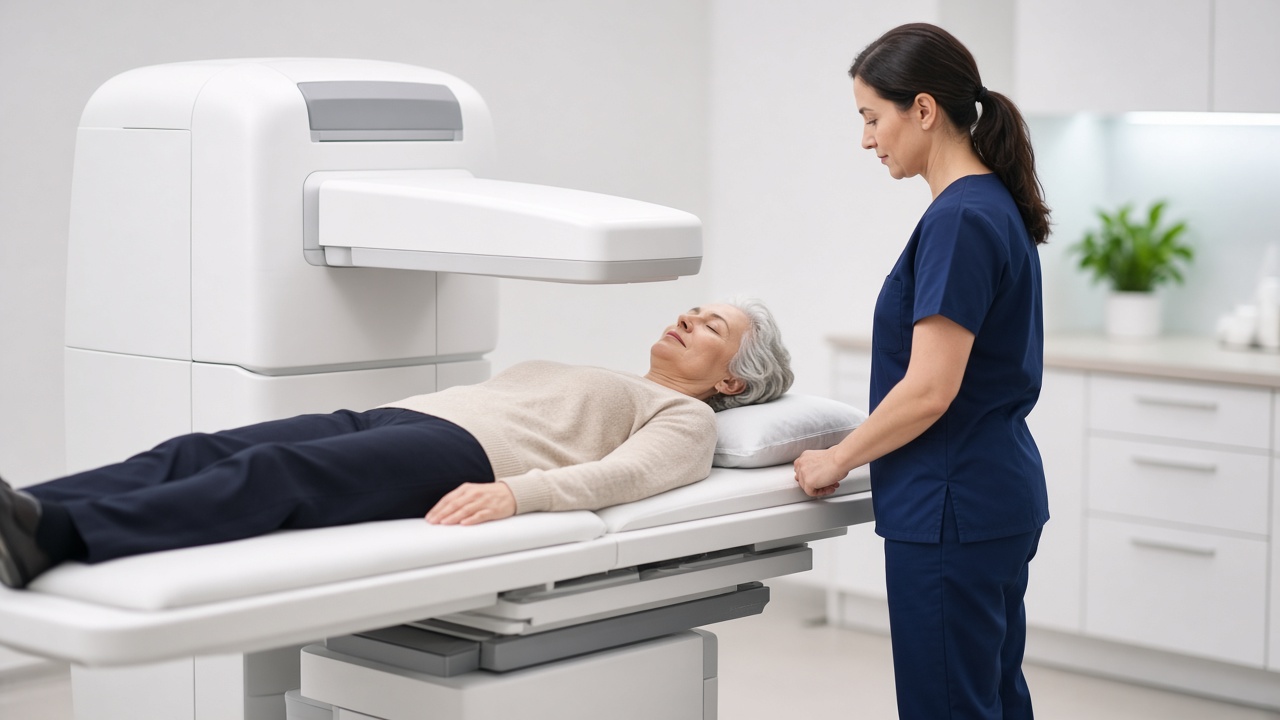
A bone density test is quick, painless, and tells you something a lot of other tests cannot: how much structural safety margin you have before a fall becomes a fracture. Here is what to expect and how to read your results, and why this screening is a core part of preventative care as you get older.
What a DEXA Scan Is
DEXA stands for dual energy X-ray absorptiometry. It is a low radiation scan, far less than a standard chest X-ray, that measures bone mineral density, usually at the hip and spine. The whole test takes about 10 to 20 minutes, you stay fully clothed aside from removing metal, and there is no prep beyond avoiding calcium supplements for 24 hours beforehand.
Who Should Get One
Current guidelines generally recommend a DEXA scan for women age 65 and older, men age 70 and older, postmenopausal women under 65 with risk factors such as low body weight, fracture history, smoking, or family history of osteoporosis, adults of any age who have had a fracture from a minor fall, and anyone on long term steroid medication or with a condition known to weaken bone.
How to Read Your Results: T-Score and Z-Score
Your results come back as two numbers. The T-score compares your bone density to a healthy 30 year old of the same sex, and this is the number used to diagnose osteoporosis. A T-score of -1.0 and above is considered normal, a score between -1.0 and -2.5 indicates low bone mass known as osteopenia, and a score of -2.5 or below indicates osteoporosis.
The Z-score compares you to others your own age, sex, and body size. This is more useful for younger patients or when looking for a secondary cause of bone loss. A lower, more negative number means lower bone density and a higher fracture risk.
What Happens After an Abnormal Result
An osteopenia or osteoporosis result is not a diagnosis to panic over, it is useful information. Depending on your score, age, and risk factors, your doctor may recommend calcium and vitamin D optimization, weight bearing exercise tailored to your fracture risk, a fall prevention review, especially if balance is also a concern, prescription medication to slow bone loss or rebuild density, or a follow up scan in one to two years to track change over time.
If you are already noticing symptoms like height loss, a stooped posture, or fractures from minor incidents, read more in Osteoporosis Symptoms in Older Adults and How to Prevent Fractures, since a DEXA scan often confirms what those symptoms are already suggesting. Because falls are the most common trigger for fractures in people with low bone density, it is also worth pairing a DEXA scan with a balance assessment if you have had any dizziness or unsteadiness, covered further in Vestibular Rehabilitation and Who It Helps.
Why Catching This Early Matters
Bone loss has no symptoms until it is advanced. Most people find out they have osteoporosis only after a fracture. A DEXA scan is one of the few tests that catches the problem before that first break happens, which is exactly when it is most treatable. This is the same early detection philosophy behind our broader preventative care approach at Prime MD Plus, where screening comes before symptoms, not after.
Due for a bone density screening, or not sure if you qualify? Schedule a DEXA scan with Prime MD Plus and get a clear read on your bone health before it becomes a bigger problem.
How to Prepare for Your DEXA Scan Appointment
Preparation for a DEXA scan is minimal compared to most medical imaging. You do not need to fast beforehand, and you can take your regular medications as usual, with the one exception being calcium supplements, which should be paused for about 24 hours before the test since they can interfere with accuracy. Wear comfortable clothing without metal zippers, buttons, or underwire, since you may be asked to change if your outfit has too much metal near the scan area.
If you have had a recent barium contrast study, CT scan with contrast, or nuclear medicine test, mention this when scheduling, since these can sometimes require a short waiting period before a DEXA scan for the most accurate reading. Bring a list of any prior fractures, your family history of osteoporosis, and any medications you take long term, especially steroids, since this information helps your doctor interpret the results in context rather than as an isolated number.
After the scan, results are typically available within a few days, and your doctor will walk you through your T-score and Z-score together with your personal risk factors as part of a broader preventative care conversation, rather than handing you a report with no context.
Frequently Asked Questions
How often should I get a DEXA scan?
Most adults with normal results repeat the scan every two years, though your doctor may recommend more frequent testing if you have risk factors or an abnormal baseline result.
Is a DEXA scan painful or does it involve a lot of radiation?
No. The scan is painless and uses a very low dose of radiation, far less than a standard chest X-ray, so it is considered very safe even for repeated use.
What is a good T-score for bone density?
A T-score of -1.0 or higher is considered normal. Scores between -1.0 and -2.5 indicate osteopenia, and scores of -2.5 or lower indicate osteoporosis.
Can I reverse osteopenia or osteoporosis once diagnosed?
Osteopenia can often be improved or stabilized with diet, exercise, and sometimes medication. Osteoporosis is managed similarly, and while reversing it fully is harder, treatment significantly reduces fracture risk.
Does insurance typically cover a DEXA scan?
Most insurance plans, including Medicare, cover DEXA scans for people who meet standard screening criteria such as age or risk factors. Check with your plan or ask our office to confirm your coverage.