
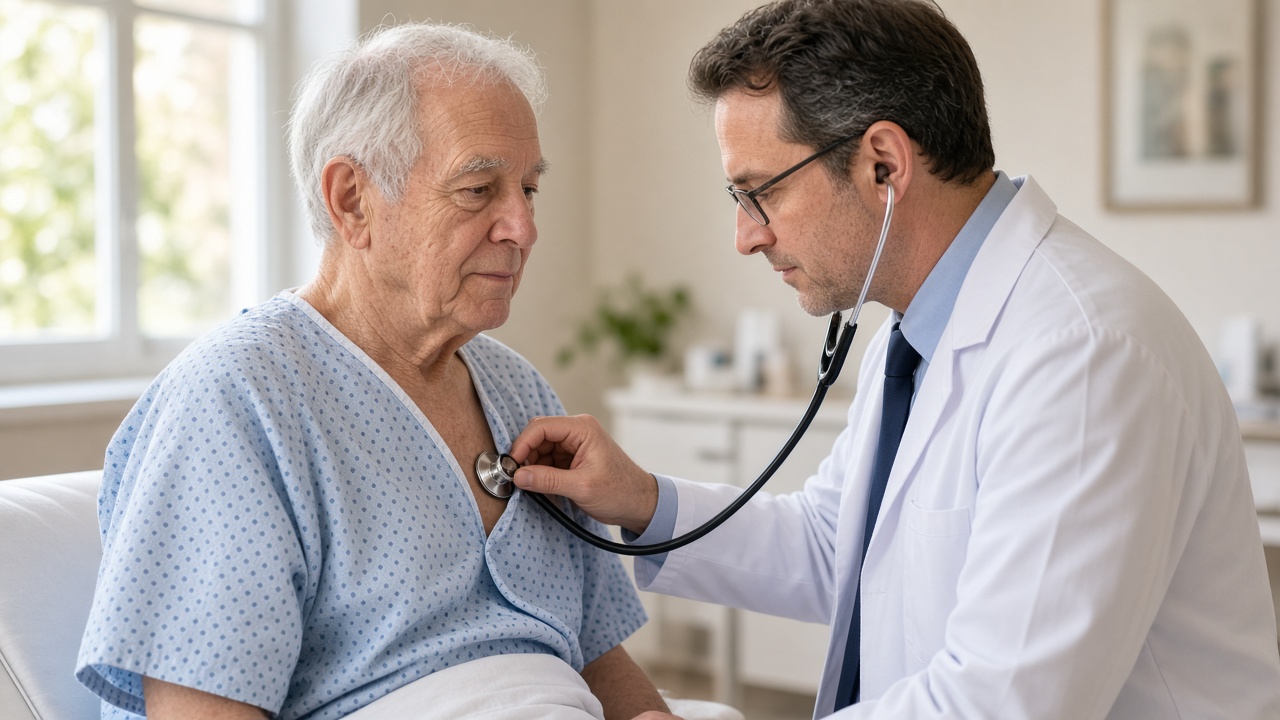
Pneumonia in a younger adult usually announces itself clearly: high fever, a productive cough, chest pain. In older adults, it frequently does none of these things, and that gap between the textbook presentation and the real one is exactly why pneumonia in elderly patients gets diagnosed later, and treated with more urgency, than in younger patients.
The Symptoms That Often Don't Show Up
Fever, the hallmark sign of infection, is frequently blunted or absent entirely in older adults due to age-related changes in immune response. The same is true for a strong cough or clear chest pain. Without these expected markers, pneumonia can progress further before anyone, patient or family, recognizes something is seriously wrong.
What Actually Shows Up Instead
In place of classic symptoms, pneumonia in older adults often presents as sudden confusion, increased weakness, a fall, loss of appetite, or simply "not being themselves." These subtle, nonspecific changes are easy to attribute to normal aging or another chronic condition, which is precisely the trap: a genuinely serious infection masquerading as something mundane.
Why This Delay Has Real Consequences
Because the presentation is subtler, pneumonia in older adults is more often diagnosed at a later, more advanced stage, which directly affects outcomes. Older adults also have less physiological reserve to tolerate a delayed diagnosis, meaning the same infection that a younger adult weathers without much difficulty can become genuinely dangerous in an older patient if it isn't caught promptly.
Underlying Conditions Change the Picture Too
Chronic conditions like heart failure, COPD, or diabetes can both increase pneumonia risk and further obscure its presentation, since symptoms of the underlying condition can mask or mimic the new infection. This overlapping symptom picture is part of why evaluating a sudden change in an older adult with existing chronic conditions requires a broader lens rather than assuming it's simply that condition acting up.
Why Family Observation Matters So Much Here
Because older adults themselves may not recognize or report subtle changes accurately, family members and caregivers often notice the shift first, a parent who's suddenly more confused, more tired, or less interested in meals. Taking these observations seriously and bringing them to a doctor's attention, rather than waiting for a more "obvious" symptom, is one of the most effective things a family can do.
Prevention Remains the Strongest Tool Available
Pneumococcal and flu vaccination substantially reduce the risk of the infections most likely to lead to pneumonia in older adults, making prevention one of the highest-value steps available. A broader geriatric care approach builds vaccination and risk reduction into ongoing care rather than treating it as a separate, occasional task.
Getting the Right Level of Attention in Coppell, TX
Sudden confusion, a fall, or simply seeming "off" in an older adult deserves medical attention, even without a fever or obvious cough. Dr. Divya Javvaji at Prime MD Plus in Coppell, TX takes these subtler signs seriously, because catching pneumonia early in older patients makes a genuine difference in outcomes.
Frequently Asked Questions
Can an older adult have pneumonia without a fever?
Yes, fever is frequently blunted or absent in older adults, which is one of the main reasons pneumonia gets missed or diagnosed late in this age group.
What's the most common early sign of pneumonia in seniors?
Sudden confusion, increased weakness, or a noticeable change in alertness or behavior are often the earliest and most reliable signs, more so than respiratory symptoms.
Why does pneumonia tend to be more dangerous for older adults?
Both the delayed, subtler presentation and reduced physiological reserve to handle a late diagnosis contribute to worse outcomes compared to younger adults.
Does having a chronic condition increase pneumonia risk?
Yes, conditions like COPD, heart failure, and diabetes increase risk and can also mask or mimic pneumonia's symptoms, complicating diagnosis.
How much does vaccination actually reduce pneumonia risk in older adults?
Pneumococcal and flu vaccination substantially reduce the risk of the specific infections most likely to lead to pneumonia, making it one of the most effective preventive steps available.