
Most people think of stress as a feeling, a tight chest before a presentation, a racing mind at 2 a.m., the low hum of dread that follows a hard week. What they don’t realize is that stress also leaves a paper trail, and that trail runs straight through a standard metabolic panel, a lipid panel, and a handful of inflammatory markers most doctors only order when something already seems wrong. A patient can sleep reasonably well, exercise a few times a week, and genuinely believe they’re managing their life fine, and still carry blood values that look like someone five or ten years older and considerably less healthy.
This gap between how a person feels and what their labs say is one of the more frustrating parts of practicing internal medicine. Chronic stress doesn’t announce itself the way an infection does, with a fever or a spiking white count that resolves in a week. It operates on a slower, quieter timeline, nudging cortisol rhythms out of shape, keeping blood sugar a little higher than it should be, and feeding a low-grade inflammatory state that doesn’t hurt until it eventually does, as elevated blood pressure, prediabetes, or a cardiac event that seems to come out of nowhere. Understanding what to look for in a blood panel gives patients and physicians a way to catch that process early, well before symptoms force the issue.
The HPA Axis: Where Stress Becomes a Hormone
Every stress response starts in the brain, specifically in a signaling loop called the hypothalamic-pituitary-adrenal axis, or HPA axis. The hypothalamus senses a threat, real or perceived, and releases corticotropin-releasing hormone, which tells the pituitary gland to release ACTH, which in turn tells the adrenal glands to produce cortisol. In short bursts this system is adaptive and even useful: cortisol mobilizes glucose, sharpens focus, and primes the body to respond. The trouble starts when the threat never fully goes away, whether that’s a demanding job, a strained marriage, caregiving duties, or financial pressure that doesn’t let up for months or years at a time.
Under chronic activation, the HPA axis stops behaving the way it’s supposed to. Healthy cortisol follows a clear daily rhythm, peaking shortly after waking and tapering steadily through the day until it’s low at night. With sustained stress, that curve flattens, morning cortisol comes in lower than expected while evening levels stay elevated, which is part of why chronically stressed patients often describe feeling “tired but wired” at bedtime. Labs sometimes pair a cortisol measurement with DHEAS, an adrenal hormone that normally counterbalances cortisol’s effects and supports immune function and tissue repair. A high cortisol-to-DHEAS ratio is one of the clearer signals that the HPA axis has shifted into a chronically dominant, catabolic state rather than a balanced one, and it’s a pattern that can be present for months before a patient notices anything beyond fatigue or feeling “off.”
Glucose and A1c: The Sugar Cortisol Leaves Behind
Cortisol’s primary job during a stress response is to make sure the body has enough fuel available, and it does that by telling the liver to produce more glucose through a process called gluconeogenesis, while simultaneously making muscle and fat tissue less responsive to insulin. In a single stressful afternoon, that’s a minor and reversible blip. Spread across months of elevated cortisol, it becomes a steady upward pressure on blood sugar that shows up on a fasting glucose test and, over a longer window, on hemoglobin A1c, the marker that reflects average blood sugar over roughly the prior three months.
This is one of the more common surprises in a Prime MD Plus visit: a patient with no family history of diabetes, a reasonable diet, and a normal BMI comes in with a fasting glucose in the 100 to 125 range or an A1c creeping toward 5.7 to 6.4 percent, the prediabetes threshold, and the only consistent variable in their life is an unrelenting level of stress. The mechanism is insulin resistance driven by cortisol rather than by diet alone, cells simply don’t take up glucose as efficiently when cortisol is chronically elevated, so more sugar stays in the bloodstream. Left unaddressed, this pattern can progress toward type 2 diabetes even in people who would otherwise be considered low risk, which is exactly why a stress-aware clinician treats a borderline A1c as a prompt to ask about sleep, workload, and emotional load, not just about carbohydrate intake.
CRP, IL-6, and the Inflammation Stress Leaves Behind
Chronic psychological stress doesn’t just move hormones and sugar around, it changes how the immune system behaves, and that shows up most clearly in inflammatory markers like high-sensitivity C-reactive protein, or hs-CRP, and interleukin-6, or IL-6. Under normal circumstances, hs-CRP below roughly 1 mg/L reflects lower cardiovascular risk, a value between 1 and 3 mg/L is considered average, and anything above 3 mg/L signals meaningfully elevated inflammatory activity. Chronic stress has a well-documented tendency to push people into that higher band even in the absence of infection, injury, or obvious illness, because sustained cortisol exposure eventually blunts the immune system’s ability to regulate its own inflammatory signaling, a phenomenon researchers call glucocorticoid resistance.
Some of the most compelling evidence for this comes from research on caregivers of patients with dementia, a population under some of the most sustained psychological strain studied in medicine. Work from Ohio State researcher Janice Kiecolt-Glaser and colleagues found that chronically stressed caregivers showed significantly higher circulating IL-6 levels than non-caregivers of the same age, along with measurably slower wound healing, a direct, visible consequence of an immune system that’s being pulled toward inflammation instead of repair. IL-6 isn’t typically part of a routine annual panel, but hs-CRP often is, and a persistently elevated hs-CRP in a patient without an obvious infectious or autoimmune explanation is a reasonable cue to ask what’s happening outside the exam room, not just inside the bloodstream.
Lipids, Blood Pressure, and the Cardiovascular Cost
Stress hormones also interact with how the body handles fat and cholesterol, and the changes aren’t subtle once you know what to look for. Elevated cortisol promotes the breakdown of stored fat into free fatty acids that the liver converts into triglycerides and LDL cholesterol, while chronic stress is independently associated with lower HDL, the cholesterol subtype that helps clear plaque from artery walls. A lipid panel drawn during a prolonged stressful period can show a pattern that looks almost identical to the one produced by a poor diet, higher triglycerides, higher LDL, lower HDL, even in someone who hasn’t changed how they eat at all.
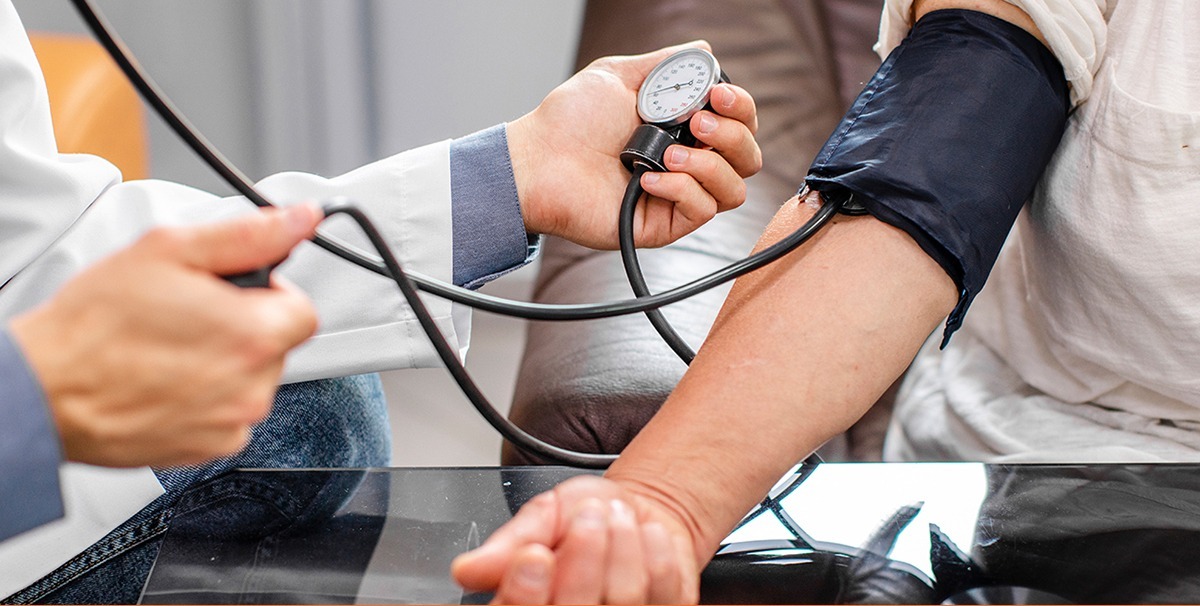
Blood pressure tells a similar story and often moves in tandem with these lipid shifts. Cortisol and the stress-related catecholamines epinephrine and norepinephrine constrict blood vessels and increase heart rate as part of the acute stress response, and when that response fires repeatedly without adequate recovery time, resting blood pressure tends to creep upward in a way that’s measurable at a routine visit. Combined with the glucose and inflammation changes already in motion, this cluster of shifts is part of why population studies consistently link chronic psychological stress to higher long-term cardiovascular risk, not through one dramatic mechanism, but through several smaller ones compounding at once.
Why “I Feel Fine” Isn’t the Same as “My Labs Are Fine”
The disconnect between subjective wellbeing and objective bloodwork is one of the main reasons chronic stress goes undiagnosed for so long. People adapt. A demanding stretch at work that would have felt unbearable a year ago starts to feel normal, not because the physiological burden has lessened but because the nervous system recalibrates what it treats as baseline. Meanwhile, cortisol, glucose, inflammatory markers, and lipids keep moving in a less favorable direction underneath that sense of normalcy, often for years before a symptom serious enough to prompt a doctor’s visit actually appears.
This is precisely why routine labs matter even for patients who have no complaints to report. A fasting glucose, A1c, lipid panel, and hs-CRP drawn annually, or more frequently for patients under sustained strain, can surface a stress-driven pattern well before it becomes diabetes, hypertension, or a cardiac event. It also reframes what “stress management” actually means clinically: it isn’t a soft lifestyle suggestion tacked onto the end of a visit, it’s a response to specific, measurable changes in a person’s blood that have real downstream consequences if they’re ignored.
Getting a Clearer Picture at Prime MD Plus
At Prime MD Plus, Dr. Divya Javvaji treats stress-related lab patterns as a starting point for conversation rather than an isolated number to normalize or dismiss. A borderline A1c, a persistently elevated hs-CRP, or a lipid panel that doesn’t match a patient’s diet or exercise habits is often a signal worth investigating alongside sleep quality, work demands, and emotional load, not just medication adjustments. For patients who want a broader lens on how daily stress is affecting the whole body, the practice’s holistic care approach pairs standard lab work with a more complete look at lifestyle, mental health, and recovery habits.
Patients in Coppell and the surrounding DFW area who’ve noticed they feel “fine” but suspect their lab numbers might tell a different story are encouraged to bring that instinct to their next visit. A conversation about stress, sleep, and workload belongs in the same appointment as a conversation about cholesterol and blood sugar, because at the physiological level, they’re often the same conversation. Learn more about Dr. Javvaji’s approach to internal medicine and primary care at primemdplus.com.
Frequently Asked Questions
Can stress really change my blood test results if I don’t feel anxious?
Yes. The body’s stress response is driven by hormones like cortisol that act on glucose, cholesterol, and inflammation regardless of whether a person consciously feels anxious, so labs can shift even when someone describes themselves as calm or “used to” their stress.
Which blood tests are most useful for catching stress-related changes?
A fasting glucose and A1c, a standard lipid panel, and high-sensitivity CRP together give a reasonably complete picture, and some practices add cortisol or DHEAS testing when the pattern warrants a closer look at the HPA axis specifically.
How long does chronic stress need to last before it affects bloodwork?
Meaningful changes in markers like A1c and lipids typically reflect weeks to months of sustained stress rather than a single bad day, since those values represent an average over time, though cortisol rhythm and inflammatory markers can shift within days to weeks.
If my labs show a stress-related pattern, does that mean I need medication?
Not necessarily. Many patients see meaningful improvement in glucose, inflammatory markers, and blood pressure through sleep, movement, and stress-reduction changes alone, though a physician may recommend medication if values are high enough to carry immediate risk.