
Zinc is one of those nutrients that quietly supports dozens of processes in your body, including immune defense, wound healing, taste, and skin health, and you usually do not notice it is missing until several of those start slipping at once. Catching this kind of gap early is a core part of holistic care.
Common Symptoms of Zinc Deficiency
Zinc deficiency symptoms tend to show up gradually and overlap with other conditions, which is part of why it is often missed. Watch for frequent colds or infections, or infections that linger longer than usual, slow healing cuts and wounds, loss of taste or smell, or food tasting off, hair thinning or hair loss, skin issues such as rashes, dryness, or slow healing irritation, loss of appetite, fatigue and difficulty concentrating, and in men, lower testosterone and reduced fertility markers.
None of these symptoms alone point clearly to zinc, which is exactly why a simple blood test, rather than guesswork, is the reliable way to confirm it. Fatigue and difficulty concentrating in particular overlap with other common causes, including medication side effects discussed in Which Statins Cause Memory Loss?, so it is worth ruling out multiple explanations at once.
Who Is Most at Risk
Certain groups are more prone to low zinc levels. Older adults are at higher risk because absorption naturally declines with age, and appetite changes can reduce intake, which is one reason zinc status is often reviewed as part of geriatric care. People with digestive conditions such as Crohn's, celiac disease, or chronic diarrhea can have impaired absorption. Vegetarians and vegans are at higher risk since plant based zinc is less bioavailable than animal sources, and phytates in grains and legumes further reduce absorption. People on certain medications, including some diuretics and long term acid reducers, are also at risk, as is anyone with heavy alcohol use, which increases zinc loss through urine.
Food Sources of Zinc
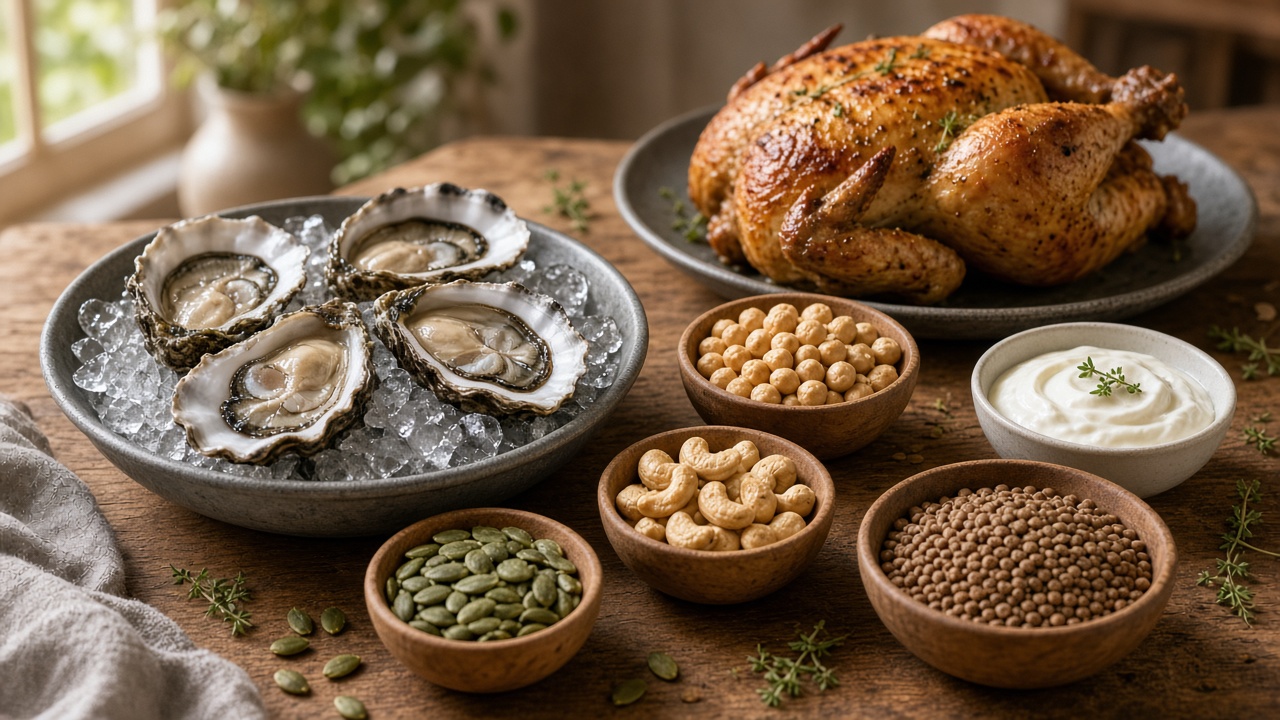
Before reaching for a supplement, it is worth knowing what is on your plate. Good dietary sources include oysters and shellfish, which are by far the richest source, red meat and poultry, pumpkin seeds and cashews, chickpeas, lentils, and beans, dairy such as cheese and yogurt, and fortified cereals.
A varied diet covers most people's needs, but the gaps above, including age, digestive issues, and plant based diets, are real reasons intake alone may not be enough.
Should You Supplement?
Over supplementing zinc has its own downside. Too much can interfere with copper absorption and actually suppress immune function, the opposite of the intended effect. This is a nutrient where more is not better. If you suspect a deficiency, a blood test and a conversation about dosage with your doctor is a better starting point than picking a supplement off the shelf.
Part of the Bigger Picture
Nutrient deficiencies like this are a good example of why holistic care matters. A symptom like fatigue or hair loss is often chased with the wrong specialist before anyone checks the basics. A root cause approach starts here, and it is one of the reasons Prime MD Plus builds nutrient screening into routine visits rather than treating it as an afterthought.
Noticing symptoms that do not quite add up? Book a holistic care visit with Prime MD Plus to check for nutrient gaps like this before treating the symptoms separately.
How Zinc Interacts With Other Nutrients
Zinc does not work in isolation, and understanding its relationships with other nutrients helps explain why guesswork supplementation can backfire. Zinc and copper compete for absorption in the gut, so taking high doses of zinc for an extended period without medical guidance can quietly create a copper deficiency, which carries its own set of symptoms including fatigue and nerve problems. This is one reason multivitamins are often formulated with a specific zinc to copper ratio rather than zinc alone.
Zinc also interacts with iron absorption when both are taken in large supplemental doses at the same time, and it can reduce the effectiveness of certain antibiotics if taken too close together, which is worth mentioning to your doctor or pharmacist if you are prescribed one while supplementing.
On the positive side, zinc works alongside vitamin A to support immune function and alongside vitamin D to support bone health, which connects nutrient status to broader concerns like the bone density topics covered in Osteoporosis Symptoms in Older Adults and How to Prevent Fractures. This kind of nutrient interaction is exactly why a holistic care evaluation looks at your full nutritional picture together rather than treating each vitamin or mineral as a separate, unrelated decision.
Frequently Asked Questions
What are the earliest signs of zinc deficiency?
Early signs often include frequent colds, slow healing cuts, and a reduced sense of taste or smell. These can be subtle and easy to attribute to other causes at first.
Can zinc deficiency cause hair loss?
Yes. Zinc plays a role in hair follicle health, and a deficiency can contribute to thinning or hair loss, which often improves once zinc levels are corrected.
What foods have the most zinc?
Oysters and other shellfish have the highest concentration of zinc, followed by red meat, poultry, pumpkin seeds, cashews, and legumes like chickpeas and lentils.
Is it safe to take a zinc supplement without testing first?
It is better to test first. Excess zinc can interfere with copper absorption and suppress immune function, so supplementing without a confirmed need can cause its own problems.
Who is most likely to have low zinc levels?
Older adults, people with digestive conditions, vegetarians and vegans, heavy alcohol users, and people on certain long term medications are all at higher risk of zinc deficiency.